

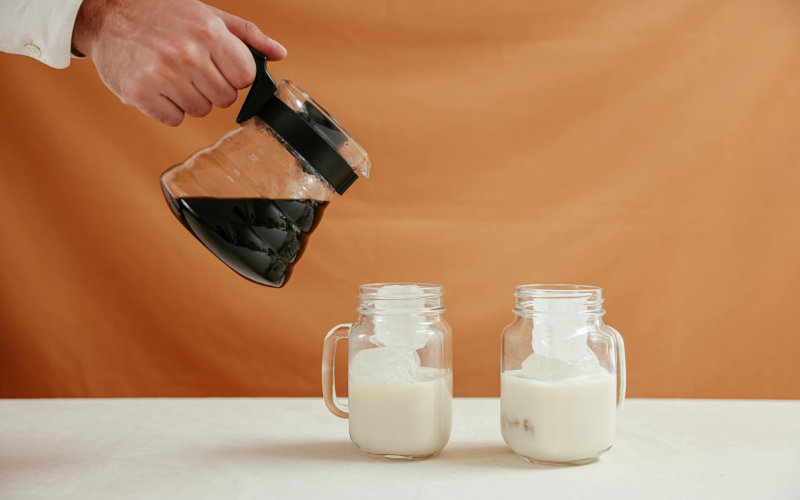

I’ve been making cold brew at home since 2016. Started because a friend swore it fixed her acid reflux — just swapped methods and never looked back, she said. That kind of story is everywhere in coffee circles. But is any of it actually true, or are we all just swapping anecdotes and calling it wisdom?
Here’s the thing: the research on cold brew versus hot coffee is messier than most “cold brew is better” headlines let on. The chemistry is real. The differences are real. But the size of those differences is where things get genuinely interesting — and where a lot of popular advice quietly collapses.
So let me walk you through what the studies actually found, what they don’t tell you, and what any of it means for your morning cup.
The Caffeine Question: Is Cold Brew Stronger?
Short answer? It depends entirely on how it’s made.
Cold brew concentrate — the stuff you dilute before drinking — can pack two to three times the caffeine of a standard drip coffee. Starbucks’ cold brew, served ready-to-drink, clocks in around 205mg for a 16oz grande. A comparable hot drip from the same chain runs about 310mg. So in that matchup, hot coffee actually wins.
But here’s where it unravels. Caffeine extraction really comes down to two things: the coffee-to-water ratio and steep time. Cold water pulls caffeine out slowly, which is why cold brew sits for 12 to 24 hours. Use a higher ratio of grounds — which most cold brew recipes do — and you end up with more caffeine per ounce, not less.
The real variable is your recipe. A cold brew at a 1:4 coffee-to-water ratio will obliterate a weak drip coffee on caffeine content. A standard 1:8 ratio, properly diluted? Roughly the same. So if anyone tells you cold brew is always stronger or always weaker, they’re skipping the math.
What Hot Water Actually Does to Coffee Chemistry
This is where the science gets genuinely interesting. Hot water — typically 195 to 205°F for optimal extraction — doesn’t just yank out caffeine. It kicks off a whole cascade of chemical reactions that cold water either slows dramatically or sidesteps almost entirely.
Specifically, hot brewing produces significantly more chlorogenic acid lactones and phenylindanes — compounds that form when chlorogenic acids break down under heat. A 2018 study in Scientific Reports by University of Pennsylvania researchers tested eight different coffees and found hot-brewed coffee was consistently more acidic (lower pH) than cold brew made from the same beans. Hot coffee averaged around pH 5.2 to 5.7. Cold brew came in between 5.8 and 6.3. On a logarithmic scale, that’s a meaningful gap.
But — and this matters — pH isn’t the whole story on stomach irritation.
The Stomach Acid Myth, Half-Corrected
The popular claim is that cold brew is “less acidic” and therefore gentler on your gut. The pH data does partially back that up. But stomach irritation from coffee isn’t purely a pH problem.
Research published in Alimentary Pharmacology & Therapeutics in 1994 (and echoed in studies since) showed that coffee triggers gastric acid secretion through mechanisms well beyond its own acidity — specifically through compounds that prod the stomach’s proton pump directly. One of those compounds is N-methylpyridinium (NMP), which forms more abundantly in darker roasts and under high heat.
So roast level matters as much as brewing method. A dark-roasted cold brew might still provoke more acid secretion than a light-roast hot coffee, even though the cold brew clocks a higher pH. Your stomach isn’t just reacting to what you pour into it — it’s reacting to what those compounds instruct it to do.
If you’ve got genuine acid reflux or GERD, switching to cold brew might help. But switching to a lighter roast brewed hot might help just as much, or more. Worth experimenting with both before you drop $45 on a mason jar cold brew kit.
Antioxidants: Does Heat Kill Them?
You’ve probably seen this claim — cold brew preserves more antioxidants because heat wrecks them. It’s partially true. Partially wrong.
The same 2018 Scientific Reports study found that hot coffee actually showed higher total antioxidant capacity than cold brew in most of the samples tested. Why? Because heat accelerates the Maillard reaction and generates new antioxidant compounds — melanoidins, specifically — that simply don’t form in cold water. You lose some. You gain others.
Net result: hot coffee isn’t the antioxidant wasteland that cold brew marketing sometimes implies. You’re looking at different antioxidant profiles, not a clear winner.
Flavor Compounds and Why Cold Brew Tastes “Smoother”
This one’s not a myth. Cold water genuinely doesn’t extract certain volatile aromatic compounds the way hot water does. It also leaves behind more of the bitter-tasting stuff — quinic acid, certain phenols — that hot brewing pulls out aggressively.
That’s why cold brew consistently tastes smoother, less bitter, sometimes almost chocolatey or sweet — especially with naturally processed beans. It’s not placebo. It’s chemistry. You’re literally getting a different drink from the same beans.
For people who find hot coffee harsh (not just acidic, but sharp and biting), cold brew can fix the sensory problem even if the pH difference alone wouldn’t register as a measurable physiological change.
Practical Guide: Which Should You Actually Drink?
Okay. Real talk. Here’s how I’d think through this:
If you have acid reflux or a sensitive stomach, try cold brew OR a light-to-medium roast hot coffee. Don’t assume cold brew automatically solves anything — your individual response matters more than the average pH reading.
If you’re watching your caffeine carefully (pregnancy, anxiety, heart conditions), measure your actual recipe. Don’t take a barista’s word that cold brew is weaker.
If you just want great flavor with less bitterness, cold brew is genuinely the answer — especially with single-origin beans where you want the fruit notes to actually show up.
And if you’re brewing at home: 1 cup coarsely ground coffee to 4 cups cold water, steeped 18 hours in the fridge, then diluted 1:1 when you serve it. Solid baseline. Adjust from there.
Bottom Line
Here’s what almost nobody says out loud: the cold brew vs hot coffee debate is mostly a proxy war about tolerance, not chemistry. The pH differences are real but modest. The caffeine differences are recipe-dependent, not method-dependent. And what’s genuinely underappreciated is how wildly your body’s response to coffee compounds varies — based on CYP1A2 enzyme activity, the gene governing how fast you metabolize caffeine. Two people can drink identical cold brews and have completely different mornings. The “cold brew is easier on your stomach” narrative is statistically supported but individually unreliable, which is why your uncle swears by it and your coworker still gets reflux. The variable was never just the brew method.
Frequently Asked Questions
Does cold brew actually have less caffeine than hot coffee?
Not reliably. It hinges on the coffee-to-water ratio. Cold brew concentrate typically runs much higher in caffeine per ounce. Ready-to-drink commercial cold brew usually lands lower than a hot drip, but homemade recipes swing all over the place.
Is cold brew really better for acid reflux?
Often, yes — the pH is meaningfully higher (less acidic) than hot coffee. But roast level and individual biochemistry factor in just as much. Lighter roasts combined with cold brewing give you the best shot at reducing irritation.
Does hot brewing destroy antioxidants?
Some, yes. But it also creates new ones through the Maillard reaction. The 2018 University of Pennsylvania study found hot coffee showed higher total antioxidant capacity in most of the samples. Neither method wins cleanly.
Why does cold brew taste smoother if the difference is mostly minor?
Because cold water doesn’t pull out quinic acid and certain bitter phenols the way hot water does. The taste difference is genuinely chemical, not psychological — you’re extracting a meaningfully different flavor profile from the exact same beans.
Photo by Cup of Couple on Pexels